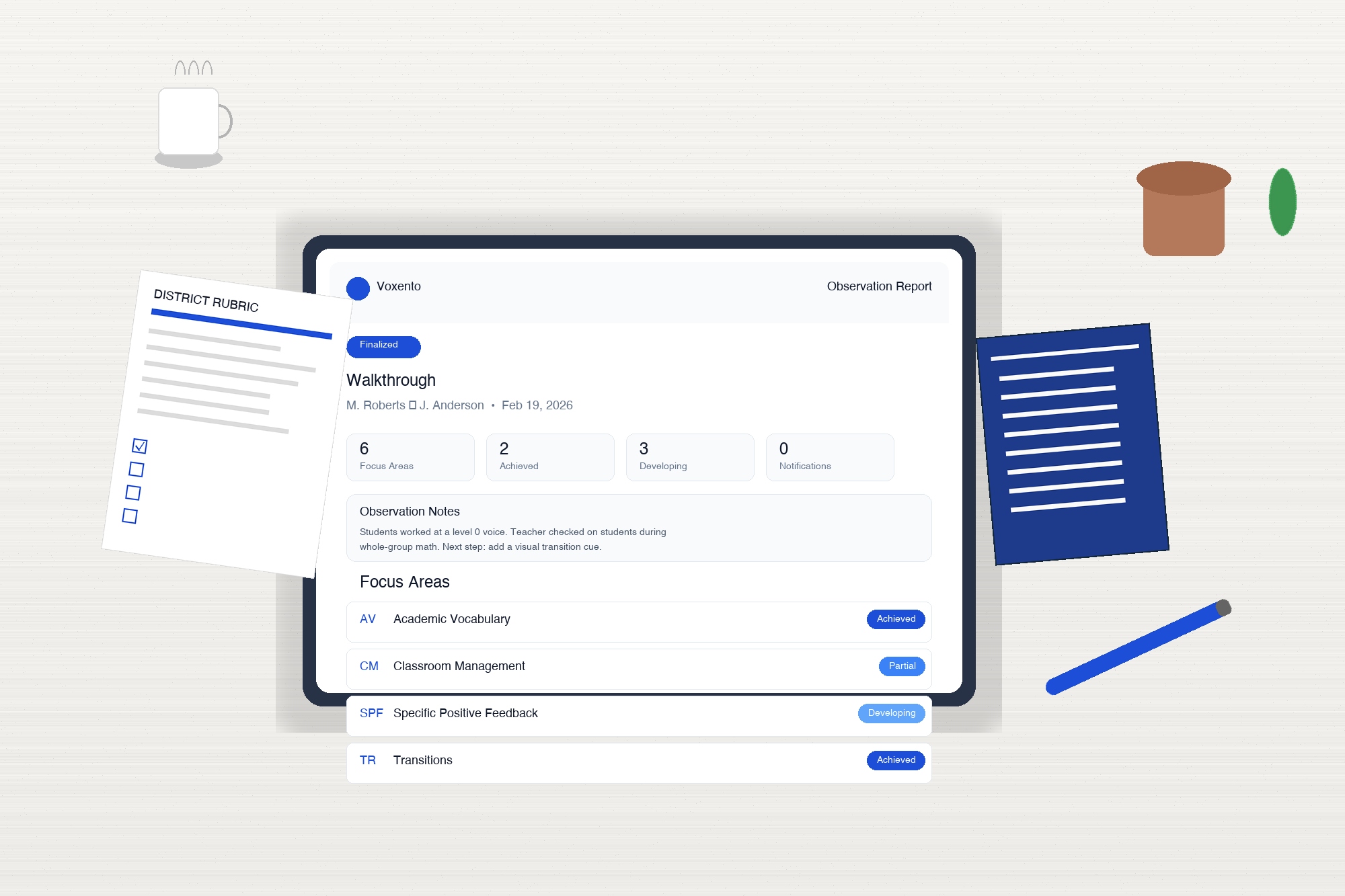
Manage observations, evaluations, and coaching in one place, with evidence and feedback connected to clear next steps.

One connected process
Plan → Observe → Follow up
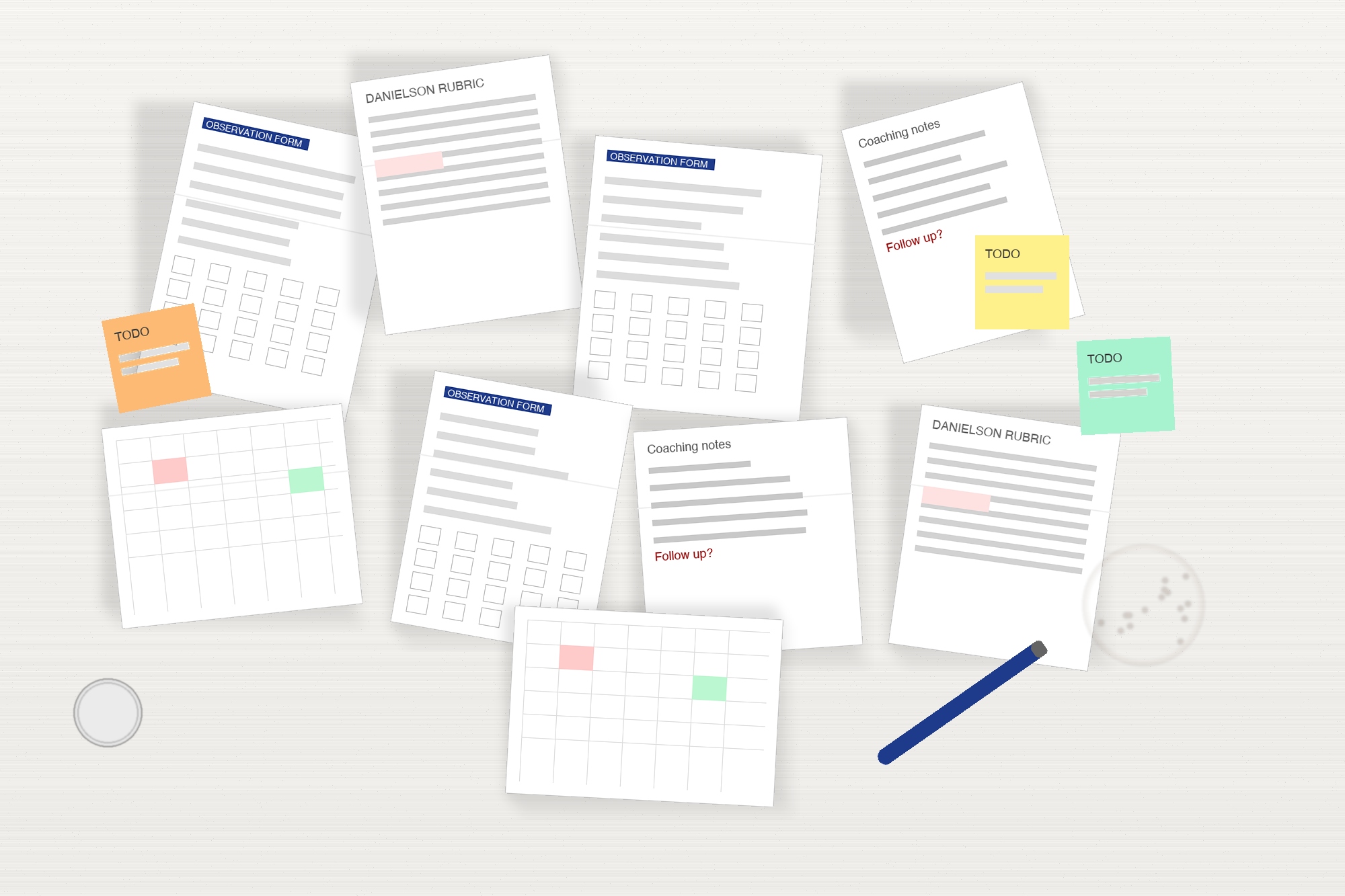
From scheduling and pre-visit forms to evidence, reports, and follow-up, each handoff adds work and makes it harder to keep the full story of a classroom visit together.

Planning a visit takes several tools.
Dates, staff assignments, and the right template can end up spread across calendars and email.
Teacher context arrives separately.
Lesson goals and pre-visit responses may sit in another form, away from the observation record.
Evidence and rubric responses get split up.
Notes, ratings, and comments have to be assembled from documents, forms, and spreadsheets.
Writing the report delays feedback.
Observers spend more time pulling the evidence together before a useful conversation can happen.
Teacher reflection gets disconnected.
Post-visit responses can live in an email or form that never reaches the final report.
Next steps and past visits are hard to find.
Action items and previous feedback can disappear before the next coaching conversation.

Plan the observation in one place.
Choose the staff member and date, then attach the template or district rubric before the classroom visit.
Collect lesson context when needed.
Send an optional pre-observation form so teachers can share lesson goals and useful context in advance.
Keep evidence and ratings together.
Keep observer notes, selected rubric criteria, ratings, and comments together in the same visit record.
Finalize the report from that record.
Review classroom evidence and complete the report from the visit record, without assembling it in other tools.
Invite teacher reflection afterward.
Invite teachers to complete an optional post-observation reflection after the report is finalized.
Return to the next steps.
Keep feedback and action items with prior visit records so they are ready for the next coaching conversation.
A complete observation cycle, with the right context before the visit and clear next steps afterward.
Choose the educator, set the date, and select the rubric and any forms.
Pre- and post-observation forms are optional and configurable. Short walkthroughs can use a lighter flow.
The right workflow for a classroom visit, a formal evaluation, or ongoing coaching.
Capture evidence in formal observations and shorter classroom visits, then keep the next steps together.
See walkthrough detailsApply your rubric, document ratings and comments, and keep a clear evaluation record.
Turn observation evidence into practical coaching conversations and growth goals.
Keep your own criteria and scoring, or explore structures for formal observations, coaching, and walkthroughs.
“How does Voxento handle a formal observation?”
Ask the Voxento guide about observations, templates, or your school’s workflow and experience a live spoken response.
Try a live conversationThe live demo opens on the next page. No sign-up required.
Voxento gives districts clear privacy, security, and product information so IT, legal, and leadership can review the platform with confidence.
Schools control their data. Student data is never sold or used for ads.
Role-based access, encryption in transit and at rest, and retention docs.
A school data protection addendum is available for district review.
Cardinal Community School District uses Voxento for formal observations and classroom walkthroughs.
Straight answers to the most common procurement and implementation questions.
We’ll walk through planning, pre- and post-observation forms, classroom evidence, reports, and follow-up with your team.
Hosted in USA, GDPR compliant.
Fully customizable platform with your branding and requirements.
Ready to use in minutes. No prior knowledge required.
Personal, fast and with real people.